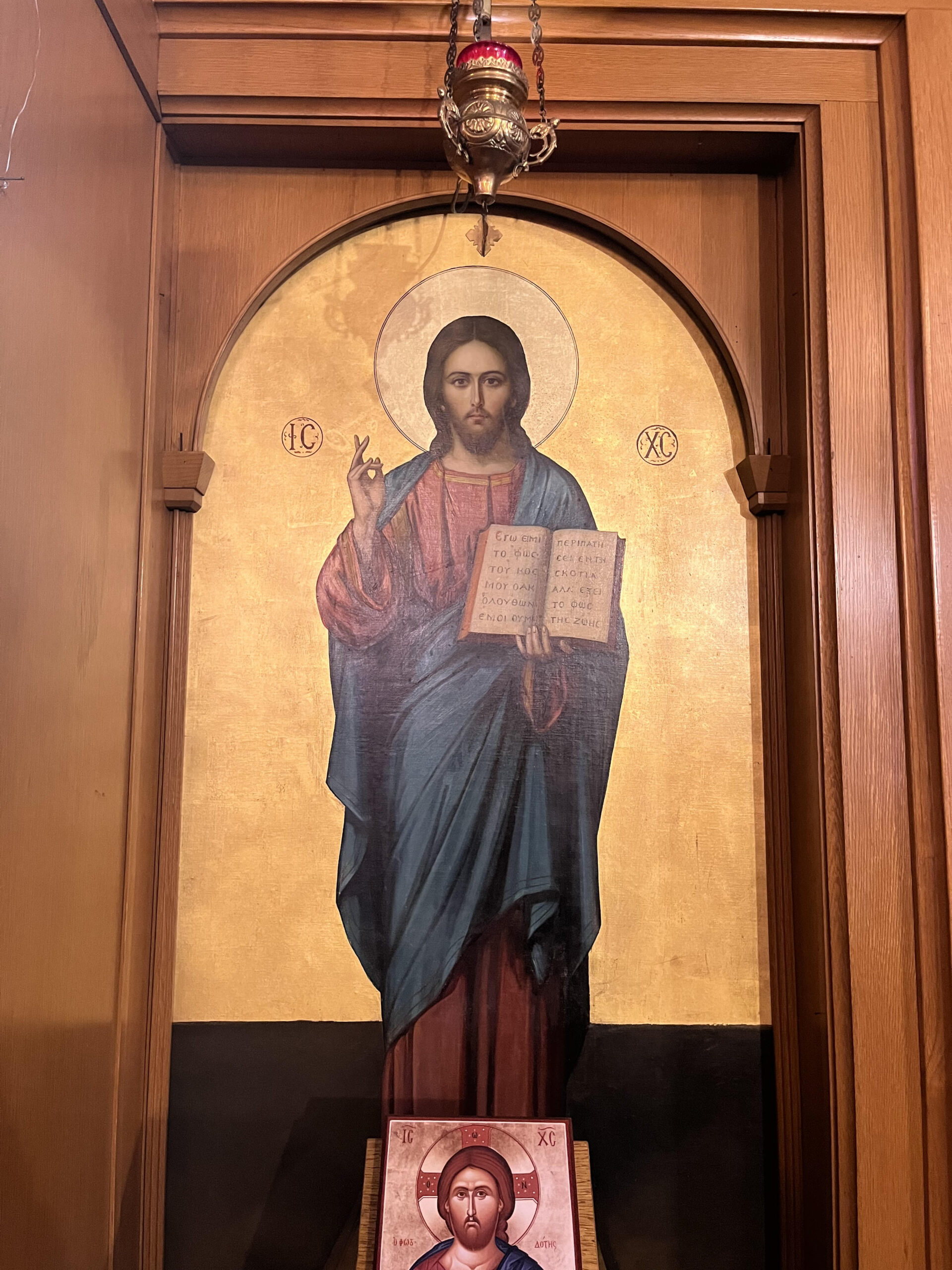
Our Father Who art in heaven,
Hallowed be Thy name.
Thy Kingdom come,
Thy will be done, on earth as it is in heaven.
Give us this day our daily bread;
And forgive us our debts (trespasses),
As we also have forgiven our debtors (as we forgive those who trespass against us).
And lead us not into temptation, but deliver us from evil.
For Thine is the Kingdom and the power and the glory, forever. Amen.
Matthew 6:9-13
The Lord’s Prayer is revealed to us in the Gospels of Matthew and Luke. In Matthew, as we have been reflecting, it is in the context of the Sermon on the Mount, and follows a teaching on prayer by Jesus, who said we don’t need to offer up many words or empty phrases in prayer. In Luke, the disciples saw Jesus praying and requested of Him “Lord, teach us to pray” (Luke 11:1) because they saw what prayer did for Him. So Jesus revealed the Lord’s Prayer as the consummate prayer, because it captures everything that is important in prayer.
It reminds us of the two great commandments—to love God and love each other—Our Father.
It reminds us of the power of God, Who is in heaven.
It reminds us to be holy as He is holy—hallowed be Thy name.
It reminds us of our destination—Thy Kingdom come.
It reminds us to be obedient and submissive to God—Thy will be done.
It helps us frame things around the needs of today, to place today in the hands of God—trusting God with our daily needs, and being a steward of the time and opportunities we have today. It doesn’t ask for wealth but rather for sufficiency.
It reminds us to forgive one another in the way that God forgives, completely wiping out the record of offenses against us.
It reminds us of the presence of evil in the world, and to flee from evil and to do good.
There is a deep question concerning the Lord’s Prayer that one might ask: Is the Lord’s Prayer enough? If you ask most people if they know a prayer, it is the Lord’s Prayer. If you ask someone to open a meeting with a prayer, they use the Lord’s Prayer, as if they are either afraid or ignorant of anything else. Is the Lord’s Prayer enough, if we never offer any other prayer? The truth is that if we really understand the depth and completeness of it, then we can offer only this prayer, and it is sufficient. There are other short prayers, even shorter than the Lord’s Prayer, that are sufficient, if truly understood their depth and meaning. A prayer like the Jesus Prayer –Lord, Jesus Christ, Son of God, have mercy on me, a sinner—can be offered repetitively, in time to our breathing, and that can be sufficient, if it is used like this. Even more simple, Lord, have mercy, captures so much.
The “problem” with the Lord’s Prayer is that most of us say it without even thinking, we say it instead of praying it, and then it becomes empty words. In some of our services, like the Great Compline during Great Lent, the Lord’s Prayer is offered multiple times, and then we race through it without much thought.
Dr. Mark Rutland wrote a book entitled 21 Seconds to Change Your World, a book about the Lord’s Prayer. He writes that it takes an average of 21 seconds to offer the Lord’s Prayer. If a person offers the Lord’s Prayer once a day and that is the total of their prayer life, that means they are spending twenty-one seconds a day with God, which really is not much at all. The Lord’s Prayer should be used as a foundation for our prayer life, and we should build from there. Just as we do during our services, we offer the Lord’s Prayer at the beginning of many of them and then we build from there. We should offer the Lord’s Prayer as a foundation and build upon that.
The good thing about a known prayer, like the Lord’s Prayer, is that it gives us a place to start, and then we can build from there. For example, we can offer each phrase of the Lord’s Prayer and build on each phrase. Our Father—thank God for being our Father, be thankful for life, pray for others. Then move on to Who art in heaven—ask God to allow us to make strides to the kingdom of heaven today.
Many people struggle to pray, to find the time, to find the words. Prayer is an intentional choice to spend time with God. As far as finding words, it is often helpful to pray the words of a prayer that is known, like the Lord’s Prayer, and then move to words that are more personal to us and our individual lives and their circumstances. To really pray the Lord’s Prayer, to pause and to meditate on its words, captures all that needs to be captured in prayer. The challenge is to not offer this prayer by rote, but to offer it with reflection which will lead to understanding and application to our lives.
I will sing of Thy steadfast love, O Lord, forever; with my mouth I will proclaim Thy faithfulness to all generations. For Thy steadfast love was established forever, Thy faithfulness is firm as the heavens. . .Let the heavens praise Thy wonders, O Lord, Thy faithfulness in the assembly of the holy ones!. . .Righteousness and justice are the foundation of Thy throne; steadfast love and faithfulness go before Thee. Blessed are the people who know the festal shout, who walk, O Lord, in the light of Thy countenance, who exult in Thy name all the day, and extol Thy righteousness. For Thou art the glory of their strength; by Thy favor our horn is exalted. For our shield belongs to the Lord, our king to the Holy One of Israel. Of old Thou didst speak in a vision to Thy faithful one, and say: “I have set the crown upon one who is mighty, I have exalted one chosen from the people.” I have found David, My servant; with My holy oil I have anointed him; so that My hand shall ever abide with him, My arm also shall strengthen him. . .Blessed be the Lord forever! Amen and Amen. Psalm 89:1-2, 5, 14-21, 52
Points to ponder: How often do you pray the Lord’s Prayer? Only on Sunday? At home? Every day? Can you commit to praying it more often? After these reflections on the Lord’s Prayer, how will you pray it differently?