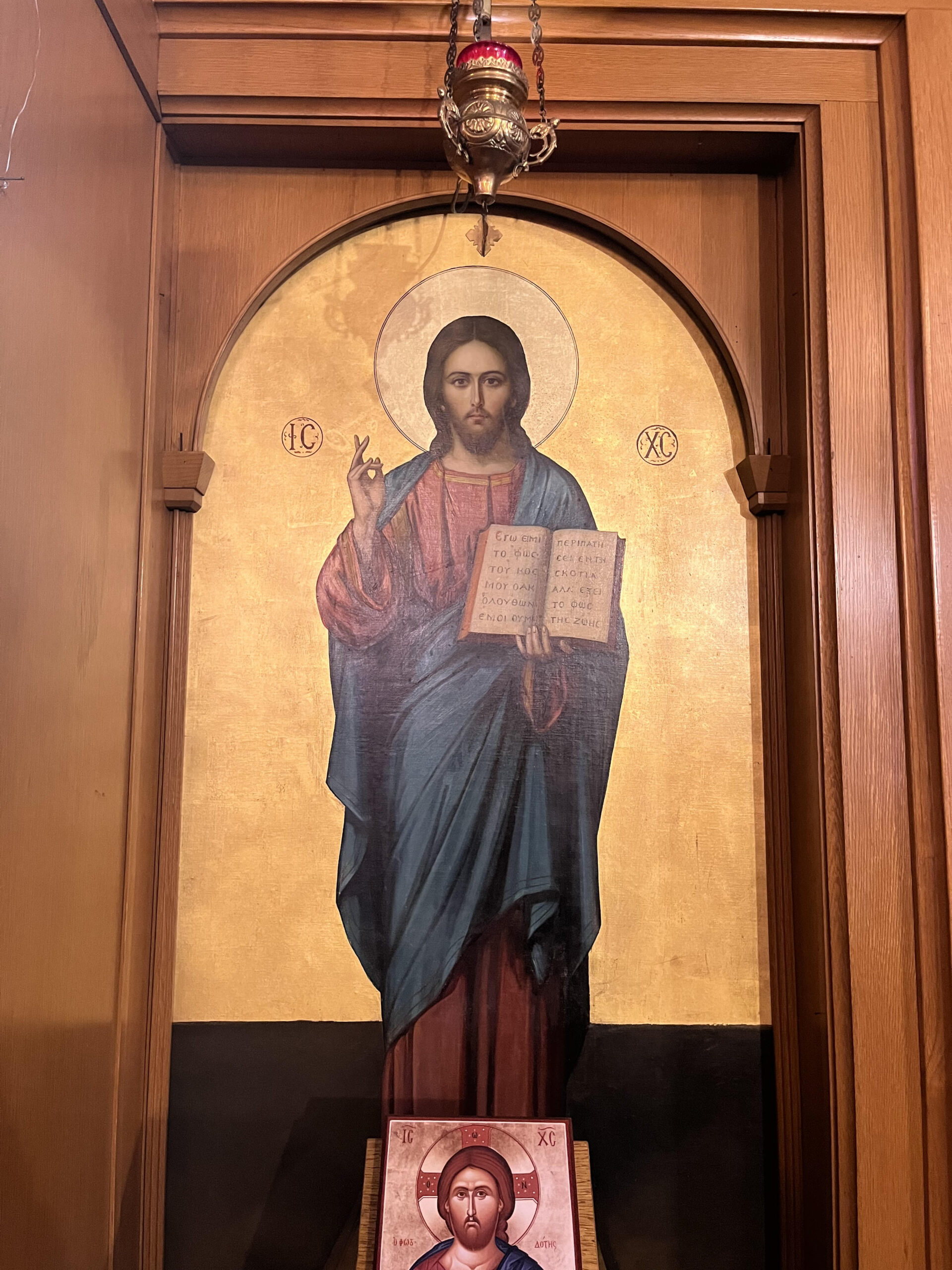
In the beginning was the Word, and the Word was with God, and the Word was God. He was in the beginning with God; all things were made through Him, and without Him was not anything made that was made. In Him was life, and the life was the light of men. The light shines in the darkness, and the darkness has not overcome it. There was a man sent from God, whose name was John. He came for testimony, to bear witness to the light, that all might believe through Him. He was not the light, but came to bear witness to the light. The true light that enlightens every man was coming into the world. He was in the world, and the world was made through Him, yet the world knew Him not. He came to His own home, and His own people received Him not. But to all who received Him, who believed in His name, He gave power to become children of God; who were born, not of blood nor of the will of the flesh nor of the will of man, but of God. And the Word became flesh and dwelt among us, full of grace and truth; we have beheld His glory, glory as of the only Son from the Father. (John bore witness to Him, and cried, “This was He of whom I said, ‘He who comes after me ranks before me, for He was before me.’”) And from His fullness have we all received, grace upon grace. For the law was given through Moses; grace and truth came through Jesus Christ.
John 1:1-17
Before we can commit to loving God, we must first understand who the God is we are committing to love. An understanding of the Holy Trinity is foundational to being a Christian, and yet, because God is beyond our understanding, a complete grasp of God will always elude us. The Evangelist John makes two references to why a complete picture of God is not possible, or even necessary. In John 20:30-31, he writes Now Jesus did many other signs in the presence of the disciples, which are not written in this book; but these are written that you may believe that Jesus is the Christ, the Son of God, and that believing you may have life in His name. And in John 21:25, he writes But there are also many other things which Jesus did; were every one of them to be written, I suppose that the world itself could not contain the books that would be written. Both examples pertain to my personal faith in God. There is enough for me to believe. God is beyond understanding. And faith is what fills the gap between what I know, and what I will never know.
John 1:1-17 is the Gospel that is read at the Divine Liturgy on the feast of Pascha. The Church, in her wisdom, in the night we complete the Lenten journey and celebrate the Resurrection, takes us back to the beginning, because the intention of Pascha is to mark a new beginning, rather than an ending. We mark this feast with renewal, not completion. The Gospels of Matthew and Luke contain the popular birth narratives which we imitate in Christmas pageants, the shepherd and the angels (Luke 2) and the visit of the magi (Matthew 2). John takes his Gospel account back to the creation of the world.
The Holy Trinity is one Godhead in three persons—the Father, the Son and the Holy Spirit. Each person from the Trinity has different names. The Father is also known as God, the Creator, the Almighty. The Son is also known as Jesus Christ, the Messiah, the Savior, the Son of God, the Son of Man, the Lamb of God, the Word (Logos). The Holy Spirit is also known as the Spirit, the Comforter, the Counselor, the Paraclete. All persons of the Holy Trinity exist eternally, none is created. All three participate in the creation of the world.
In John’s Gospel, he begins by affirming that the Word (Jesus Christ) was in the beginning with God, and that He is God. He was part of every step of creation. Nothing was made without Him being present in it.
The first thing we need to believe about God is that He is greater than us. Someone greater than us made us. And not only did God create everything, including us. He created us perfect, because He is perfect. He did not create us imperfect, or with the intention for us to be imperfect. God placed mankind in the Garden of Eden, Paradise, with the intention that God and man would live in unity, in communion, in everlasting bless and perfection. As we will learn in this unit, love is a choice. It is not forced. So God didn’t force mankind to live like this. He gave mankind a choice. Out of love, He gave mankind a choice. He told mankind that one tree in the Garden of Eden, the tree of the knowledge of good and evil, was off limits. Mankind could partake of anything in the garden except that tree. Mankind’s choice to love God would be demonstrated by avoiding one thing that God said was off limits. God said that if mankind partook of the tree of the knowledge of good and evil, the consequences of this would be death, separation from God.
Mankind was tempted by the devil, in the form of a serpent, to believe a lie, that we would not die if we partook of the forbidden tree. Sin, as we will explore later, is an absence of love. In one moment, mankind stopped loving God and chose to follow a lie. The consequences of this are called the Fall, and include a now less than perfect life (sickness, fatigue, succumbing to temptation, various aberrations of “love” which aren’t love at all, and ultimately, physical death. The whole world lives in this state of being, that’s why it’s called a “fallen world.” The second thing we need to believe is that the world fell through sin.
And the third thing we need to believe to be a Christian is that the world is redeemed through the saving acts of Jesus Christ, the Word become flesh (John 1:14). The light of God illumines every person who comes into the world (John 1:9) However, God gives us a choice to embrace the light within us, to let it shine, or to cover it over. John, in the prologue to his Gospel, reminds us that Jesus was rejected by His own people. (John 1:11), But to all who received (and still receive) Him, who believe in His name, He gave power to become children of God. (John 1:13)
After the Fall, God did not abandon His people. He gave them the Law, which established rules for how the people were to love God and love one another. However, obedience to the Law had its flaws. Because people were following the Law, by and large, by coercion and fear, not out of love. To put a modern spin on this, do we obey traffic laws because we love them, or because we don’t want a ticket or accident? God wants us to follow out of love, not out of fear or coercion. And so He sent the Word (Jesus Christ) into the world, to show us how to love one another and how to love God, to show us that love is based on things like faith, truth and grace, rather than Law and coercion. Christ did not abolish the Law, but took it many steps further.
If we are to attempt to define God, we can do it a single word: Love. God is experienced in love. He is defined by His love for us. Theologians have written volumes upon volumes on the nature of God. If one wants to understand God, then love is a good place to begin.
Lord, thank You for the gift of another day. In this day, may I come to a greater understanding of You by demonstrating love. May I find joy in seeking love. May I not feel the burden of coercion to love but rather the joy in the opportunity to love You and to love others. Help me to deepen my understanding of love by studying You. And help me deepen my understanding of You by seeking love. Amen.
John 1:17 says that grace and truth came through Jesus Christ, the embodiment of love. May we find love through the truth of the Gospel.