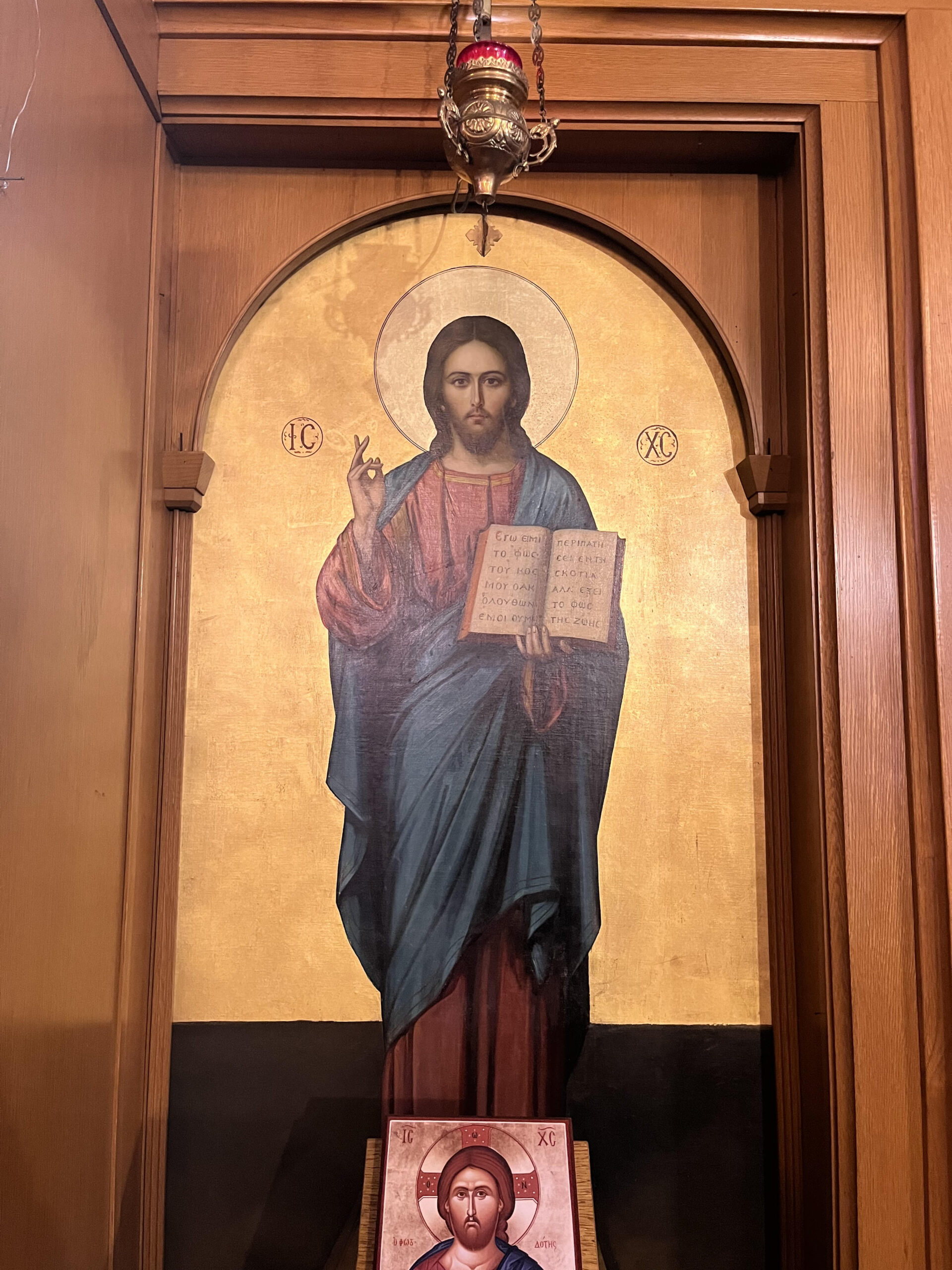
In the beginning God created the heavens and the earth. The earth was without form and void, and darkness was upon the face of the deep; and the Spirit of God was moving over the waters. And God said, “Let there be light”; and there was light.
Genesis 1:1-3
The two great commandments, as we have already discussed, are that we are to love God and to love our neighbor. Before we can commit to loving God, we have to define God and what we believe about Him. Probably the reason people are lukewarm about their faith is that they haven’t taken the time to understand God, or get to know Him.
Most Orthodox (hopefully all), if asked the question “Do you believe in God?” will say yes. When asked “What do you believe about God?” there are lots of faithful people who have a hard time quantifying an answer. This answer is best addressed by the words of the Nicene Creed, a 200+ word statement of faith written in 325 A.D. at the First Ecumenical Council in Nicaea and edited into final form in 381 A.D. at the Second Ecumenical Council in Constantinople.
The Creed is divided into five sections—what we believe about God the Father, Jesus Christ, the Holy Spirit, the Church and the life of the age to come. And it is actually not a “we” believe but an “I” believe, because the Creed is a personal statement of faith. For the next five reflections, we will discuss each section of the Creed, in order to have a more defined understanding of God and therefore commitment to Him.
In our bodies, we do not separate our parts. Our brains have a distinct function, but we don’t ever separate them from our bodies. Separated from our bodies, they would not work. God is Trinity. One God in Three Persons. In Greek, the words used to describe this are one ousia (essence) in three hypostases (persons). I suppose if we were to compare the Trinity to our bodies, God the Father would be like the brain, God the Son would be like the mouth, and God the Holy Spirit would be the hands. God the Father is the Creator. God the Son is the mouthpiece, the One who speaks on behalf of the Trinity. God the Holy Spirit is the On who now leads the Church.
If we want to be a Christian, the first thing that we must accept is that One Who is greater than us made us. We were not created by a lesser entity. We did not create ourselves. We were created by One greater than us. In the Creed, we begin with the words “I believe” and what follows are the five things we believe in.
I believe in one God, Father Almighty, Creator of heaven and earth, and of all things visible and invisible. The Creed affirms the first of the Ten Commandments, that there are no other gods but our God. One God, in three persons. One of the things that is confusing is that each of the three persons of the Trinity has several names. God the Father is also referred to as “Father,” “Almighty” and “Creator.” God is the Father of all of us. Because while our “creation” can be traced to our parents, the first people created were created by God, and thus we are descendants of them, with God as the Father of all.
There have been many examples of “might” in world history. Mighty armies, mighty leaders, mighty civilizations. And these mighty armies were eventually treated, every leader eventually dies, and even the mightiest of civilizations have fallen. There is only one Almighty, who is never defeated, who never dies, who never falls, and that is God. God is the creator of heaven and earth. Everything we see has its origin in God. We might built a house out of wood, but it was God who created the first tree. God also created the things we cannot see, like air, and things we haven’t yet discovered, like other galaxies. Each step of creation was an intentional creation by God. He orders all things so that they work in sync.
The Son and the Holy Spirit were not revealed until the New Testament. In the Old Testament, the “God” who is followed and referred to is “God the Father” but the rest of the Trinity is also at work from the Creation of the world. In the first verses of the Bible, at the time of the creation, the beginning (it is crucial to remember here that God, the Trinity, is uncreated, without beginning), we read “In the beginning God created the heavens and the earth. The earth was without form and void, and darkness was upon the face of the deep; and the Spirit of God was moving over the waters. And God said, “Let there be light”; and there was light.” God created refers to God the Father. The Spirit of God refers to the Holy Spirit. And the voice commanding that light be created is the Word of God, Who would later be incarnated in the flesh in the person of Jesus Christ. The Creed begins by affirming faith in God the Father, who is also “God” of the Old Testament, the God who created the Old Covenant, the God who led Israel out of Egypt, etc. God’s people were told through prophecy about the coming of a Messiah but wouldn’t fully comprehend that until the revelation of Jesus as the Christ. They also would not understand the nature of the Trinity until it would be revealed first at the Baptism of Christ and then through His teachings.
Lord, God, Father Almighty, thank You for the gift of creation, of the things we see and the things we cannot see, the things we know and the things we cannot know. Thank You for the natural beauty of the world. Help me to not only believe in You, but respect the work of Your hands, as a good steward of the world I inhabit, with the life and breath You have given me today. Amen.
The first thing we confess in the Creed and the first thing we need to believe in order to be a Christian is that someone greater than us, God, made us, and made everything else. He also created everything perfect. The Fall of mankind was not the choice of God but the choice of His creation.