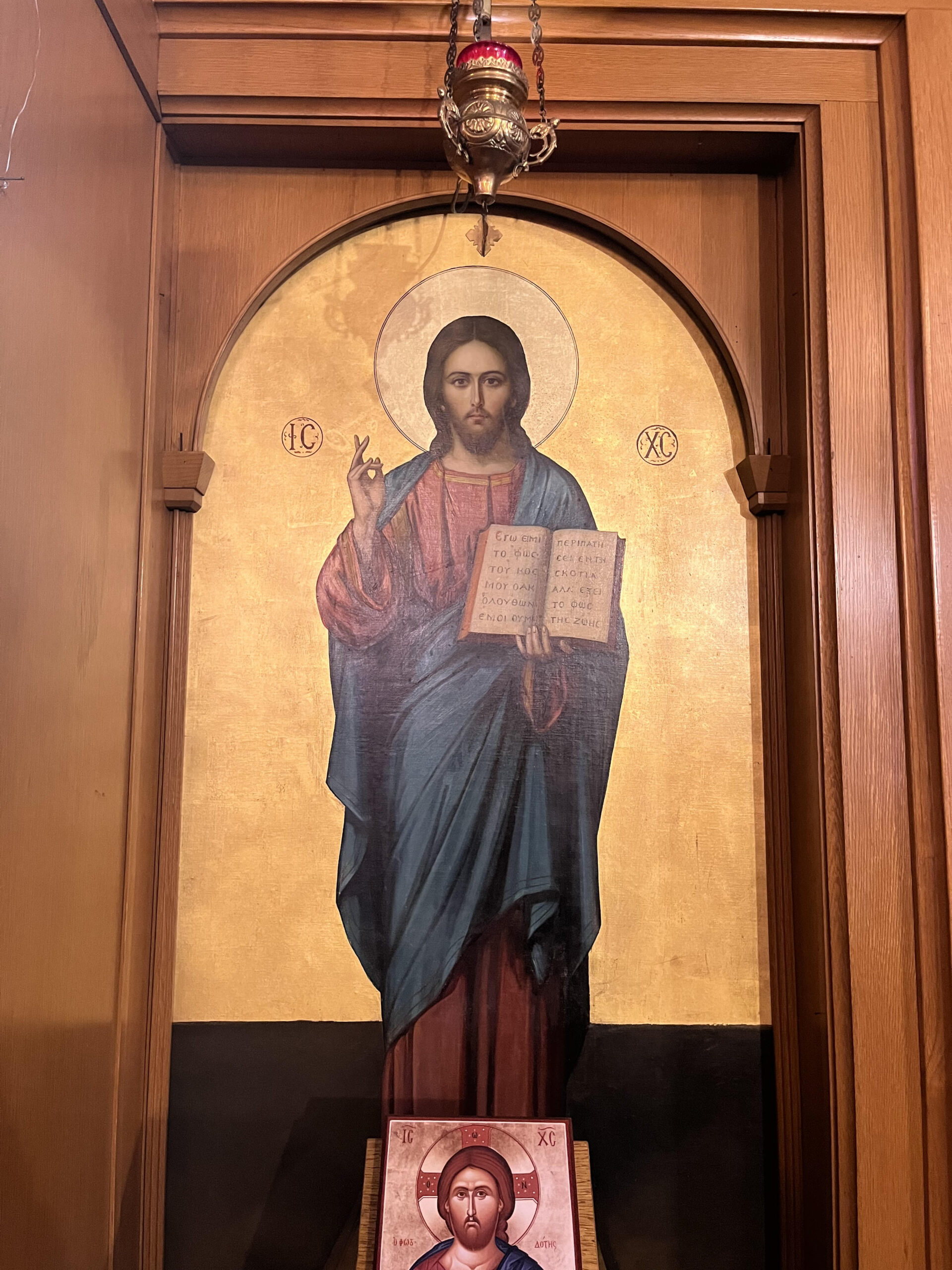
For if you love those who love you, what reward have you?
Matthew 5:46
Many/most people enjoy beautiful marriages, are thrilled to be parents of their children, and love their own parents. That is the ideal. That is the goal. That is the hope. We hope to love everyone, especially those we are related to. Every relationship will go through its dry spells, but sometimes love is challenging even with those with whom we would think it is automatic. That is the subject of this reflection. This reflection will probably not apply to all of us, hopefully not even to most of us, but it will apply to some of us.
Love is a choice, as we have discussed previously. So, what do you do about people who you are related to that you don’t especially like? Lots of people find themselves in this position. I suppose there are times we are less than satisfied with our parents, spouses and children. However, we can still love someone even when we are annoyed with them. We hopefully work through annoyances, and with effort and grace, we can hopefully restore relationships that go through challenges. What about when it goes beyond a temporary challenge and becomes a permanent one? Because it happens to people, even the best of people. Here are some thoughts:
Regarding a spouse. Marriage is a choice, and it is a commitment. In the Orthodox world, we do not take vows where we say “For better or for worse, in good times and in bad ones.” In the marriage service, we do quote Matthew 19:6, where Jesus says “What God has joined together, let not man put asunder.” And this refers not only to people outside of a marriage who may threaten to break it up, but to the couple themselves. Jesus allowed for divorce in the case of adultery, and through centuries of study, the church has identified other reasons where divorce is allowed. The Greek Orthodox Archdiocese of America lists 13 reasons why divorce is allowed, including infidelity but also abuse, abandonment, mental illness and others. What is not on the list is “we’re not in love anymore.” Marriage is a commitment to work through the valleys that most couples go through, the times when it is hard to love your spouse. A popular relationship book (which I highly recommend) is “The Five Love Languages” by Gary Chapman. There is a chapter about loving the unlovable, which speaks about how to rescue even the darkest of relationships, again assuming that abuse and safety are not issues.
Regarding a child. Bearing children is also a choice. A child does not choose to be born, but is born of parents who chose to have a child. The child at the beginning is totally dependent on its parents for life—a two-year-old cannot cook a meal, or drive itself to the doctor when illness strikes. A two-year old cannot change his own diaper or take care of his teeth. The parent has to do this. Even if the child is a tough one, the parent has a responsibility to raise that child to adulthood, providing for its needs. A parent isn’t allowed to quit on a child, no matter how challenging that child gets, unless of course there is a safety threat.
Having raised a child and having watched other people raise theirs, there are three stages of parenting. When a child is under 18, so in legal terms, they are a minor, the parent is a director of their life. The parent provides food, medicine, clothing, takes the child to school, makes sure homework is done, soccer practices are made, and directs many other things in the life of that child. When the child becomes an adult, and goes off to college, as an example, the parent takes on the role of consultant. The child is not in front of the parent every day, he or she is beginning to make their own decisions, without input from a parent necessarily. The child can still call on the parent for consultation, but the parent will have a more difficult time directing a child that no longer lives under their roof. The third stage is friendship, and this occurs once a child gets married and has a family of his own. The spouse becomes the primary consultant for someone who is married, which leaves the parent to hopefully be looked at as a friend. It is a challenge to love children who don’t love back, just as it is challenging to love a spouse who does not love back, but we are called to love. Jesus says in the Gospels, “For if you love those who love you, what reward have you?” (Matthew 6:46) and “If you love those who love you, what credit is that to you?” (Luke 6:31) The challenge is to love even when it is difficult to love. It is also to remember that love is supposed to be unconditional, it is not an exchange, but an offering made without expectation of return.
Regarding a parent. There are lots of people who grow to dislike their parents. There are lots of reasons for this. Maybe they are disappointed with how they were raised and carry resentment into adulthood. Maybe a parent had a hard time shifting from director to consultant to friend and is meddling in a marriage or in a child’s adult life. The fifth commandment tells us “Honor your father and your mother, that your days may be log in the land which the Lord Your God gives you.” (Exodus 20:12) It is interesting that of all the Ten Commandments, only this one is tied to long life. Perhaps that is because when we are children, if we don’t follow our parents when they tell us not to pet a snake or touch a hot stove, our life might not be long upon the earth. The commandment also uses the word “honor” in our relationship with our parents. We are to honor them, when we are young, and especially when they are old. Unlike marriage and having a child, both of which are choices, we do not choose our parents. We are born into a relationship not of our choosing where love seems to be required. A careful read of the fifth commandment, however, shows us that “honor” is required, not necessarily love. Hopefully we love our parents, but even if we do not, we are commanded to honor them, which means we are to cut a piece of the pie of life for them, no matter how busy life gets. (Again, there are parents who abuse children, in childhood or even in adulthood, and this is a different scenario. Safety comes above everything. Convenience does not.) As people live longer, it is often a challenge to honor and help aging parents, while raising one’s own children and trying to have a good marriage.
A steward is a temporary caretaker. We take care of things, and we take care of people that are entrusted to us. Because nothing is permanent, except faith. My parents are no longer alive. I have a wife and son. At the end of life, I will stand in front of God and answer for how I took care of my parents, my wife and our son. Did I love them? Did I honor them? Did I make time for them? Did I forgive them when they didn’t do right by me? Did I care about doing right by them? In thinking of how we honor spouses, children and parents, these are the questions we have to ask ourselves.
Lord, thank You for the gift of relationships, especially family. Strengthen my relationship with (my parents, my spouse, my children, whatever you may have). (Remember my parents in Your heavenly kingdom [if they are deceased]). Lord help me to be a better (spouse/child/parent). Help me to be a good steward of all my relationships, especially when they are challenging. Give me patience and kindness and help me to love without condition. Amen.
The relationships in our lives that are permanent become challenging when those whom we are supposed to love become difficult to love, or in some cases, might seem to be unlovable. As we have discussed many times, God expects effort.