Blessing and glory and wisdom and thanksgiving and honor and power and might be to our God forever and ever! Amen.
Revelation 7:12
In the previous reflection, we discussed how every good and perfect gift is from Above, how everything we have and everything we experience that is good traces its origin back to God. No matter what is going on in life, everyone has at least one thing that is good, and that is life itself. If you are reading this message, that means you are alive, and with life, there is the opportunity for love God, to serve others, and to repent. These opportunities are on the table for every person, every day.
So what is our reaction to the good and perfect gifts from God? When someone receives a gift from someone, that demands a response, usually in the form of gratitude, and then looking for an opportunity to honor the giver. We do not accept gifts by condemning or ignoring the giver. The gifts from God also demand a response, and the conclusion of the prayer guides what that response should be—glory, thanksgiving and worship.
To give glory to God means to give not only respect, but adoration. It means to make God the priority. “Priorities” are things that are at the top of the list in our lives. We generally have a few priorities—faith, family, work, friends, rest. Even in these priorities, there is a hierarchy. Each person orders them differently, and this is probably a product of one’s age and stage in life. A teenager or a college student might prioritize friends over family. A young adult might prioritize working towards job advancement over everything else. To give glory to God is to put Him as THE priority, the first on the list—ahead of family, friends, job, ourselves. Everything is done under His umbrella. This is indeed a high bar. St. John Chrysostom said, “Glory to God for all things.” To give glory to God for every good and perfect gift and even to give Him glory in the times that are far from good and perfect, this is what it means to make God the priority.
Thanksgiving is something else we should be offering to God. And it is not because God needs our thanks or approval. It is because thanksgiving puts us in a posture of love, obedience and service. When someone does something for us, we offer thanksgiving with both words and deeds. We receive a gift and we offer a verbal “thank you” and/or a written note of thanks. Receiving a gift grows a relationship between giver and receiver in a positive direction. The receiver looks for an opportunity to honor the giver, to return the good feelings that were had. It feels good to receive a gift. The receiver wants the giver to have the same feeling. Again, God doesn’t need our gifts in order to make Him feel good. However, it must make God smile when one of His children does something that honors Him. When someone receives the life of a new day and dedicates that day to God, when he or she uses that day to walk in sync with God.
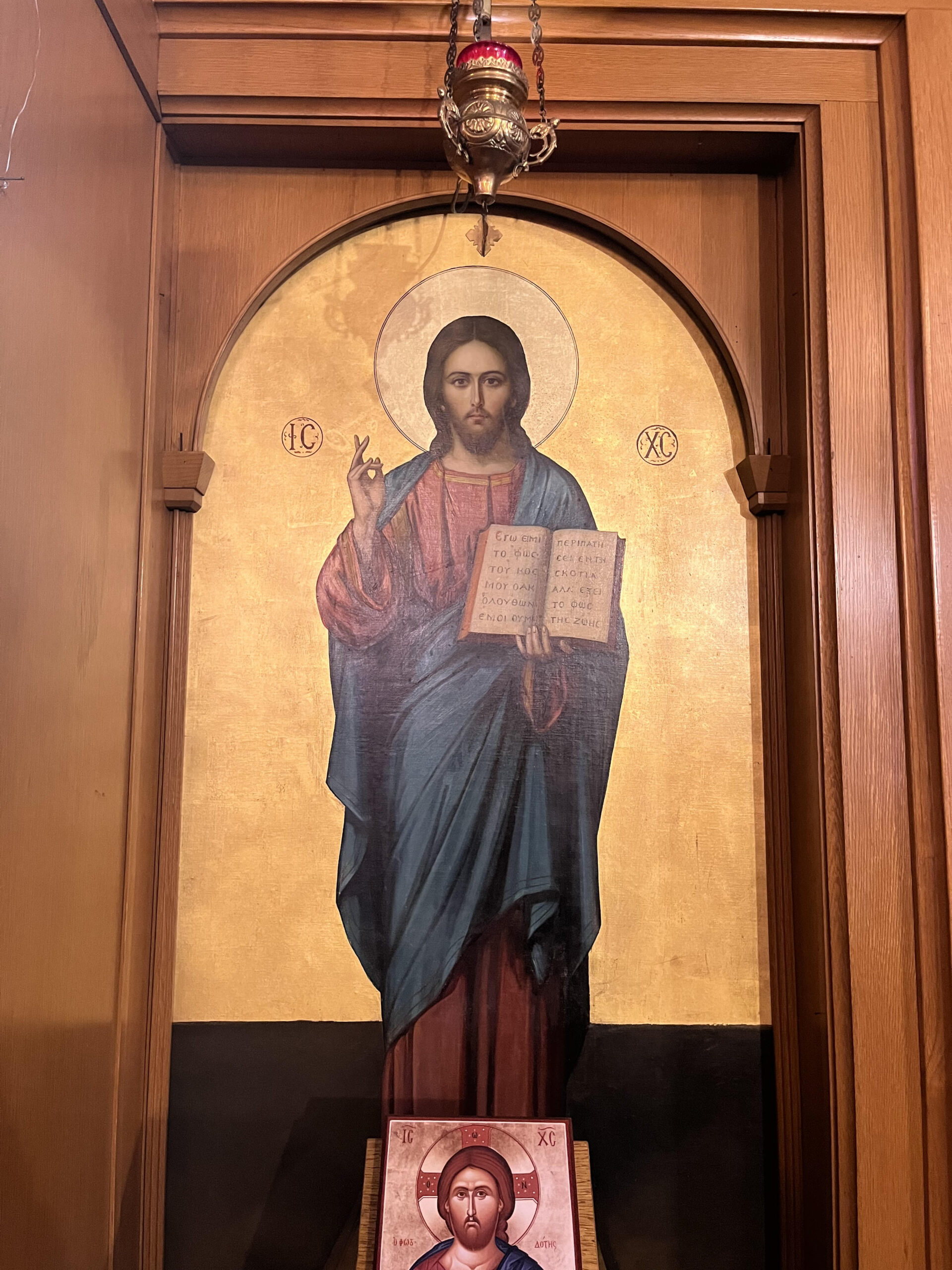
The word “worship” in Greek is “proskeno”. When we use this word, there is an implied physical gesture of bowing down in worship. For instance, when we venerate an icon, we bent at our waist, we bow our head, and we venerate the icon, and at that moment, we are one with that icon, we cannot do anything else or even see anything else while we are venerating an icon. In worshipping God, we take a posture of reverence, we bow down physically, emotionally, mentally, spiritually, and we become one with God, unable to think of or to see anything else. To offer worship to God means to connect with Him in this way, where all is blocked out except us with Him. Worship is so important because it both sets our place with God and His place with us. It reaffirms the relationship of Master, Father and Provider (God) with servant, child, and receiver of God’s gifts (us.)
What can we really offer back to God? There is nothing material that we can offer the one who created all things. In the offering of bread and wine at the Divine Liturgy, we say “We offer to You these gifts from Your own gifts.” In other words, we are not offering to God, as much as we are offering back to God. In asking ourselves, what can we offer to God in exchange for all that He has offered to us, all we have to offer is glory, thanksgiving and worship.
We end each prayer in the Orthodox Church with a doxology to the Holy Trinity. We do not pray “in Jesus’ name.” Rather, we pray in the name of the Holy Trinity. God has been revealed as Trinity, and we give glory to God in Trinity. God is uncreated. He was, He is, and He always shall be. This is why in giving glory to the Trinity, we add the phrase “now and forever and to the ages of ages.” The priest has offered the prayer (and it is interesting to note that THIS prayer is always offered by a priest, even when a bishop is present), and the people answer the prayer with the customary, “Amen,” which means “let it be so.”
O Lord, bless those who praise You and sanctify those who put their trust in You. Save Your people and bless Your inheritance. Protect the whole body of Your Church. Sanctify those who love the beauty of Your house. Glorify them in return by Your divine power, and do not forsake us who place our hope in You. Grant peace to Your world, to Your churches, to the clergy, to those in public service, to the armed forces, and to all Your people. For every good and perfect gift is from above, coming down from You, the Father of Lights and to You we send up glory, and thanksgiving, and worship, to the Father and to the Son and to the Holy Spirit, now and forever and unto the ages of ages. Amen.
This “good and perfect” prayer is offered right before the end of the Divine Liturgy. It sends us back into the world with a disposition of comfort, peace and gratitude. May we carry this prayer in our minds and hearts throughout our lives, not only during the Divine Liturgy, but especially outside of it.