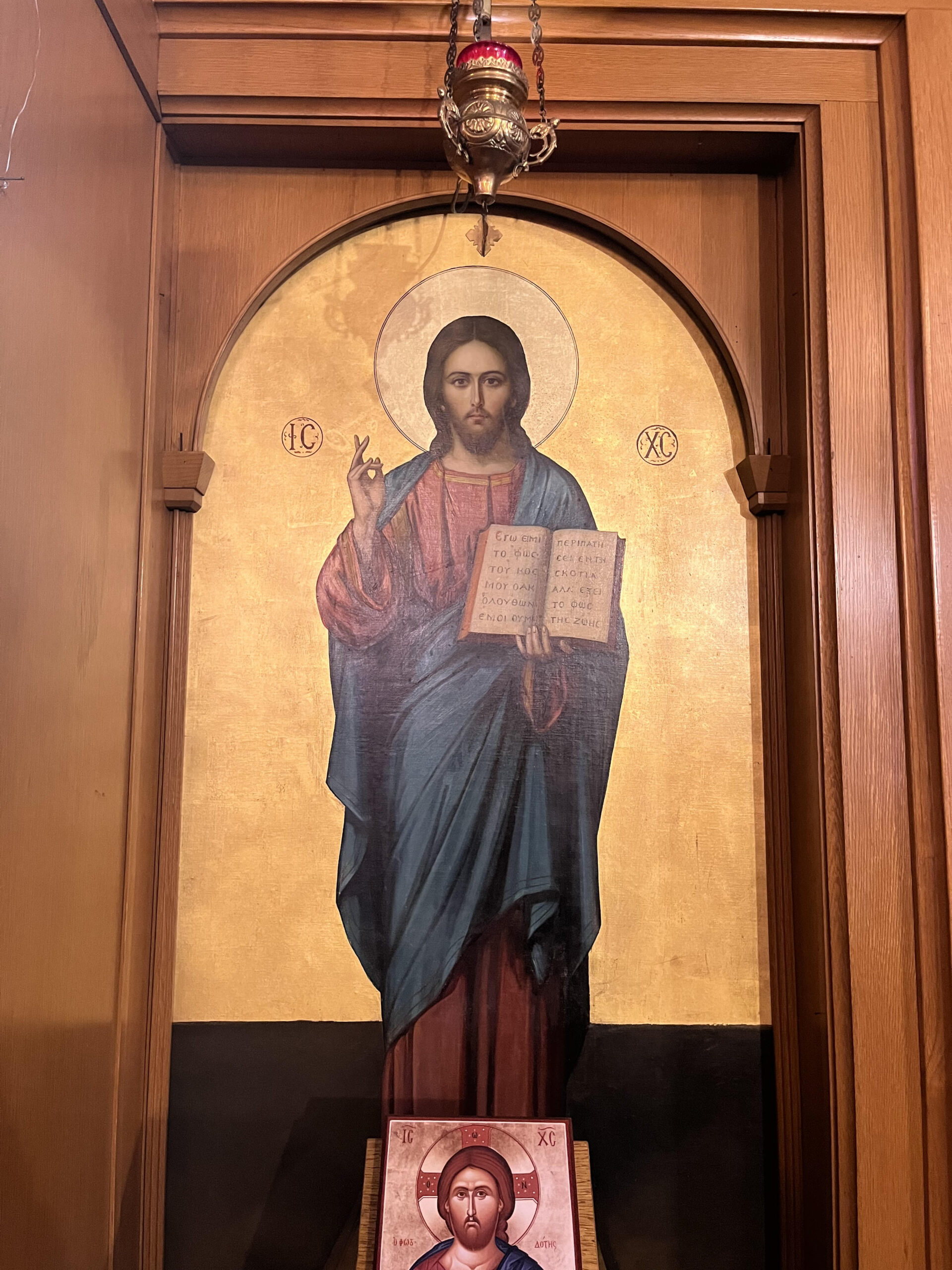
For He will render to every man according to his works: to those who by patience in well-doing seek for glory and honor and immortality, He will give eternal life; but for those who are factious and do not obey the truth, but obey wickedness, there will be wrath and fury.
Romans 2:6-8
The most important question we will ever answer in our lives is: What is my destiny? If there is no such thing as eternal life, then our destiny is to one day be buried and forgotten, which would make the purpose of this life to have as much fun as we can while we can because at some point everything will stop and there will be nothing. This would also make getting old very depressing. Each birthday or life milestone would be something sad because it would be one more step towards nothing.
As Orthodox Christians, we believe that our destiny is to stand before the awesome judgment seat of Christ where we will account for what we did in our lives and He will judge us either worthy of entering the Kingdom of heaven or He will judge us unworthy and send us away into eternal punishment.
There are two critical things we must accept: First, everyone will receive eternal life; it’s just a matter of where we will spend eternity. We will either have eternal bliss in the Kingdom of heaven, or eternal punishment in hell. There will be no reprieve from eternal punishment if this is where we are sent, no working off sin for a few years. Second, there will be a judgment and this judgment belongs to the Lord, not to us. We don’t preach “hellfire and brimstone” a lot in the Orthodox Church. We find references to hell in some of our hymnology, and some of it is actually pretty harsh (look up Orthros hymns for the First Saturday of Souls and the Sunday of the Last Judgment). Someone once told me that they were leaving our particular parish because of a sermon I had given on the judgment and that they didn’t think God would actually exclude anyone from heaven. The concept of judgment before God is well-supported by the words of Jesus Christ, as well as the letters of St. Paul.
If our destiny is to stand before God and be judged on what we did with our lives, then the purpose of life becomes to prepare for that judgment. That doesn’t mean we live in a constant state of fear, but it does mean that there is some self-evaluation on how we are using our talents and our opportunities. And because we may judge ourselves either too harshly or not harshly enough, it is good to present ourselves before God in the sacrament of confession, to own up to our shortcomings and to examine the stewardship of our lives—i.e. how we are using the talents and opportunities that we have been given. (As an aside, when I hear confessions, I don’t just listen to a list of sins and offer encouragement to correct them. I ask about how someone is doing in life, in family, in career, in being involved in the church, etc. not to be nosey, but to give an opportunity for someone to evaluate what they are doing, not just the bad, but the good as well.)
The Creed concludes with a statement of belief about eternal life. I confess one baptism for the forgiveness of sins. I look for the resurrection of the dead and the life of the age to come. Amen. The most important day of a person’s life is the day that they die, because how they die affects eternal life. Think of the thief on the cross, whose life had been judged worthless by his society. And in his dying minutes, he found his salvation. There is no doubt that was the most important day of his life.
The second most important day of one’s life is the day they are baptized. Because baptism marks one’s entrance into the Christian life and begins their journey to salvation. There has always been some “initiation” into the life of the Church. Before Christ, it was circumcision, a ritual that marked a person as a child of God, and marked their entry into the body of God’s people, the Church (or the temple before the time of Christ). We no longer circumcise people but there is still a sacrament of initiation into the life of the Church and that is baptism. (God is the judge of everything, and in a case where someone is not baptized, because they died before a baptism could be done, we believe in the mercy of God. Same with someone who has never heard of God. But these are outliers. The Tradition of the Church is that we are to be baptized.) Baptism isn’t an achievement or an ending, but rather it marks the entry of someone into the life of the Church, and into the army of God. As a member of the Church, as a child of God, there are expectations to love God and to serve others, based on the talents and opportunities which we have been given.
Which brings us to the third most important day of our lives, which is TODAY, the day we have. We live somewhere between the day of our baptism and the day of our death. If we believe that there is life after this life, and that a judgment before the throne of God stands between us and that, and that that judgment determines where we will spend eternal life, then today (and everyday) becomes an important day. Every day is an opportunity to honor God by using our talents, and to love others by serving them. When we have spent a lifetime of making the most out of today, when the most important day of our lives comes, the day we exit this life and enter eternal life, then that will not be a cause of fear but a cause for joyful expectation.
Saint Paul writes in Romans 2:6-8, For He (God) will render to every man according to his works: to those who by patience in well-doing seek for glory and honor and immortality, He will give eternal life; but for those who are factious and do not obey the truth, but obey wickedness, there will be wrath and fury. It remains, then, up to each of us how we will spend today. Will we be patient, seek to do well, give glory to God, honor His word, and work for that which is immortal rather than temporal? Or will we choose to be factious, follow our own truth rather than God’s truth, and do that which God considers wicked? A caveat when it comes to following “truth.” The world encourages us to follow our own truth, “you do you,” as if the highest moral authority is our own definition of truth. Christ calls us to follow after Him, “The way, the truth and the life,” (John 14:6) and St. Paul warns that there will be wrath and fury for those who do not follow after truth.
Lord, thank You for the promise of eternal life. This brings us both a goal, and hope and a purpose. Help me to understand eternal life and to have it as the number one goal in my life. Help me to understand and live out my purpose, which is to be a good steward of today, and to prepare for eternal life, and the Judgment that precedes it. May I work with hope in Your promises, and be inspired to give my best today and every day. Amen.
Our belief in the life of the age to come will materially shape what we do or do not do today. Heaven is there for those whom God judges worthy to enter. Which is why we need to make the most of each day, working our way from our baptism to our death, walking the path of the Gospel.