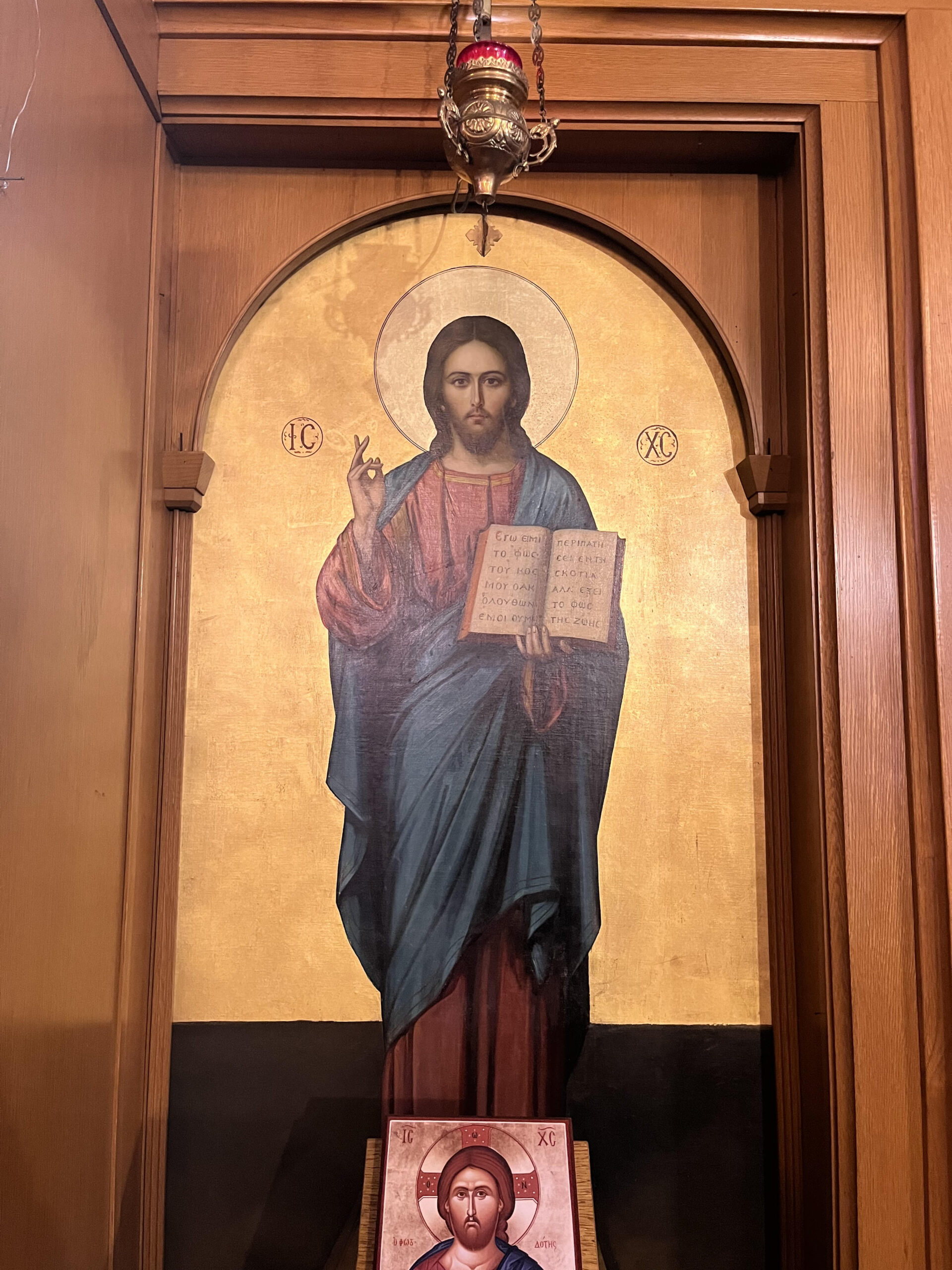
“Not everyone who says to me, ‘Lord, Lord,’ shall enter the Kingdom of heaven, but he who does the will of My Father who is in heaven. On that day many will say to Me, ‘Lord, Lord, did we not prophesy in Your name, and cast out demons in Your name, and do mighty works in Your name?’ And then will I declare to them, ‘I never knew you; depart from Me, you evildoers.’”
Matthew 7:21-23
In the last reflection, we reflected on Jesus’ words that we will be known by our fruits. Good trees cannot bear bad fruit. Bad trees cannot bear good fruit. And bad trees that bear no fruit will be cut down and thrown into the fire.
Jesus continues the sermon by saying that there will be people who think they are bearing good fruit who really are not, and who will be rejected by God. This is a scary proposition. What if I think I’m doing well in my Christian walk and really I am not? Jesus says in Matthew 7:21-23, “Not everyone who says to me, ‘Lord, Lord,’ shall enter the kingdom of heaven, but he who does the will of My Father who is in heaven. On that day, many will say to Me, ‘Lord, Lord, did we not prophesy in Your name, and cast out demons in Your name, and do mighty works in Your name?’ And then I will declare to them, ‘I never knew you; depart from Me, you evildoers.’” I read this and I think, “Lord, Lord, I was a priest in Your name. I celebrated the Divine Liturgy in Your name. I served the Church in Your name.” And according to Jesus’ teaching, I might be rejected with the words “I never knew you.” By extension, it might be that some of those reading this message sing in the choir in His name, or teach Sunday school in His name, or serve on the Parish Council in His name. And still not please God.
How can this happen? It is possible to attend the Liturgy and not really believe in God, or serve on the Parish Council, or sing in the choir. It is possible to believe in God and do these acts of service in the church but to live a life that is incongruent with the service one is offering. It is possible to be Pharisaical in our practice of the faith—to have the outward trappings of the faith but to have an inward disposition that is not faithful, or loving, or forgiving, or generous. Because Orthodoxy has so many trappings—we wear nice crosses, or have nice icons in our homes, or as a priest we wear nice vestments and have beautifully appointed churches—it is easy to lull oneself into spiritual complacency but reveling in the trappings and forgetting to worship and serve God. The “trappings” if you will are important because they set a tone and a mood, but they are not everything, or most of the thing. I write all the Prayer Team messages in my office. So at the moment I am writing each of these messages, the church sanctuary next door is empty. It is beautiful, filled with icons and nice appointments, but it doesn’t come alive unless it is full of people. The icons that are on the walls of our homes are nice decorations but they don’t do much unless we pray in front of them.
Our society encourages self-deception because we are encouraged to follow “my truth,” meaning whatever someone finds is true for them. The problem is that “my truth” and “the truth” (meaning the truth of Christ, stated in John 14:6, “I am the way, and the truth and the life”) might be in conflict. But if I am encouraged to follow “my truth” then I can deceive myself into thinking “my truth” is “the truth” when in fact, it very well might not be even close.
How does one avoid the trap of self-deception? To answer this question, let’s look at another angle of self-deception, which is our health. We can deceive ourselves that we feel good, or that some ache or pain isn’t all that bad. If we go to the doctor and allow ourselves to be examined, we might very well find that the truth is we have a condition we’ve been ignoring or one we weren’t aware of. This is why we go to the doctor periodically to be examined for the problems that are known as well as the ones that are unknown. The same principle works for our spiritual lives. We go to confession to work on the known problems (the sins we want to confess) but also to let ourselves be examined for underlying problems we may not have even identified. For instance, someone comes in to confess their sins, and afterwards, I might ask them questions like “how regularly is your prayer life,” or “how strong is your understanding of Scripture,” or “how often do you receive Holy Communion?” To allow ourselves to be examined by someone outside of ourselves allows for hopefully more objectivity, which lessens the possibility of self-deception.
One of the “truths” being perpetuated, even in the Christian world, is that God is going to let everyone into heaven. In a world where it is not politically correct to discriminate in any way, we lull ourselves into thinking that God will not discriminate either when it comes to who is going to enter the Kingdom of God and who is not. Clearly there will be a demarcation of people who will enter and people who will not. Today’s passage confirms this. So do many others. We deceive ourselves when we think otherwise.
In my distress I cry to the Lord, that He may answer me: “Deliver me, O Lord, from lying lips, from a deceitful tongue.” What shall be given to you? And what more shall be done to you, you deceitful tongue? A warrior’s sharp arrives, with glowing coals of the broom tree! Woe is me, that I sojourn in Meschech, that I dwell among the tents of Kedar! Too long have I had my dwelling among those who hate peace. I am for peace; but what I speak, they are for war! Psalm 120
Point to ponder: When is the last time you went for confession and allowed someone to examine you from a spiritual perspective?