“Enter by the narrow gate; for the gate is wide and the way is easy, that leads to destruction, and those who enter by it are many. For the gate is narrow and the way is hard, that leads to life, and those who find it are few.
Matthew 7:13-14
The society at the time of Christ was an agrarian society. Lots of people were farmers, raising either crops or animals. Many people owned sheep, and shepherds were hired to watch over the flocks. The ratio of sheep to shepherd was 100:1. In Luke 15:4, Jesus says “What man of you, having a hundred sheep, if he has lost one of them, does not leave the ninety-nine in the wilderness, and go after the one which is lost until he finds it?” It’s actually doubtful that any shepherd would leave ninety-nine sheep and go looking for one, because that would leave the ninety-nine wide open to an attack from a predatory animal, or at best, even more of them getting lost. This is why Jesus is the ultimate shepherd, because He will go after a lost sheep and rejoice when He finds it more than over ninety-nine who never went astray.
Instead of barns, stables and outdoor pens, sheep would often sleep in caves. Remember from the Nativity story that Jesus was born in a cave, surrounded by animals, because animals would often sleep in caves. There were three reasons for this. First, a cave offered better insulation from the cold than a barn or stable. Second, using a cave was easier than assembling materials and building a barn. And third, an open sheep pen would allow for an animal like a wolf to jump in and harm the flock. A cave would have a narrow door.
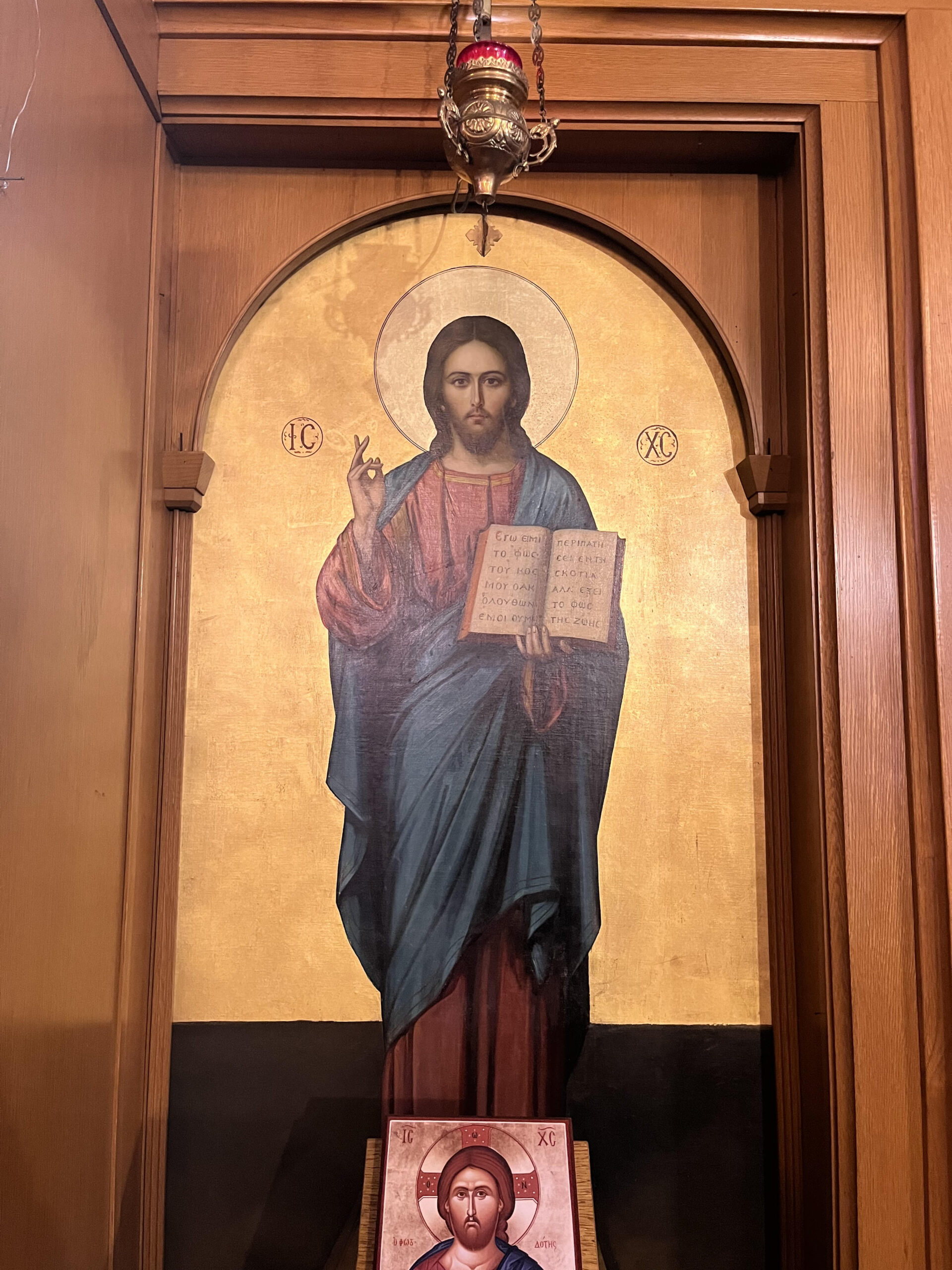
In John 10, Jesus would reveal Himself as the Good Shepherd with this words: “I am the door; if anyone enters by Me, he will be saved, and will go in and out and find pasture. The thief comes only to steal and kill and destroy; I came that they may have life and have it abundantly. I am the Good Shepherd. The Good Shepherd lays down His life for the sheep.” (John 10:9-11)
The good shepherd would defend his flock against all predators. He would be willing to stand in the narrow gate to prevent any animal seeking to harm his flock from getting in. By necessity, that gate would have to be narrow, the width of the shepherd. One would have a hard time defending an area wider than himself. Jesus describes the path to eternal life as a narrow gate. If one is to enter by the narrow gate, then one would have to line up on a narrow path, which would lead to this small target destination. One would have to wait patiently in the line on the path to get to the gate.
Jesus contrasts the narrow gate that leads to life with a wide path that leads to destruction. It takes discipline to find the narrow path; it takes patience to wait in the line. The wide path, by contrast, does not require either patience or discipline. So, it is attractive to people. People don’t like accountability or responsibility. They think it is a threat to freedom. The wide path is attractive because it doesn’t require either. However, the wide path leads to destruction, while the narrow path leads to the security and peace of eternal life. The ultimate freedom is found in eternal safety, rather than temporal security.
These verses of the Sermon on the Mount set the stage for Jesus to reveal Himself not only as the Good Shepherd and the Door, but as “THE Way, THE Truth and THE life.” (John 14:6)
I once saw a funny meme about these verses related to the narrow gate and the wide path. It said “There is a reason they (songs) call it a ‘Stairway to Heaven’ but a ‘Highway to Hell.’” And while that makes for a funny meme, the point is serious. Presented with a wide road where one can drive fast, versus hundreds of flights of stairs to climb, one would undoubtedly choose the ease of the highway rather than the work of climbing the stairs. Imagine the image of an endless highway, versus an endless stairway. One can drive on the endless highway and never “ascend” from the earth. A highway can take someone to some pretty high places, but it will never leave the earth. Metaphorically climbing a stairway could lead us to ascend from the earth. This is why St. John Climacus writes about a ladder of divine ascent, rather than a highway.
Most people would choose flat ground over climbing stairs. Which is why Jesus speaks about a narrow path that is hard, but leads to eternal life, versus a wide path that leads to destruction, and how most people will choose the wide path which is attractive, rather than the narrow one that is difficult. And perhaps in choosing these paths, they won’t think out the consequences or the destination. Jesus reassures us that the narrow path, even though it is harder, has the eternal reward, while the attractive path does not. Faith is choosing the harder path and trusting that it leads to eternal life.
Preserve me, O God, for in Thee I take refuge. I say to the Lord, “Thou art my Lord; I have no good apart from Thee. As for the saints in the land, they are the noble, in whom is all my delight. Those who choose another god multiply their sorrows; their libations of blood I will not pour out or take their names upon my lips. The Lord is my chosen portion and my cup; Thou holdest my lot. The lines have fallen for me in pleasant places; yea, I have a goodly heritage. I bless the Lord who gives me counsel; in the night also my heart instructs me. I keep the Lord always before me; because He is at my right hand, I shall not be moved. Therefore my heart is glad, and my soul rejoices; my body also dwells secure. For Thou doest not give me up to Sheol, or let Thy godly one see the Pit. Thou dost show me the path of life; in Thy presence there is fullness of joy, in Thy right hand are pleasures forevermore. Psalm 16
Point to ponder: What makes the Christian path attractive? What makes it difficult?