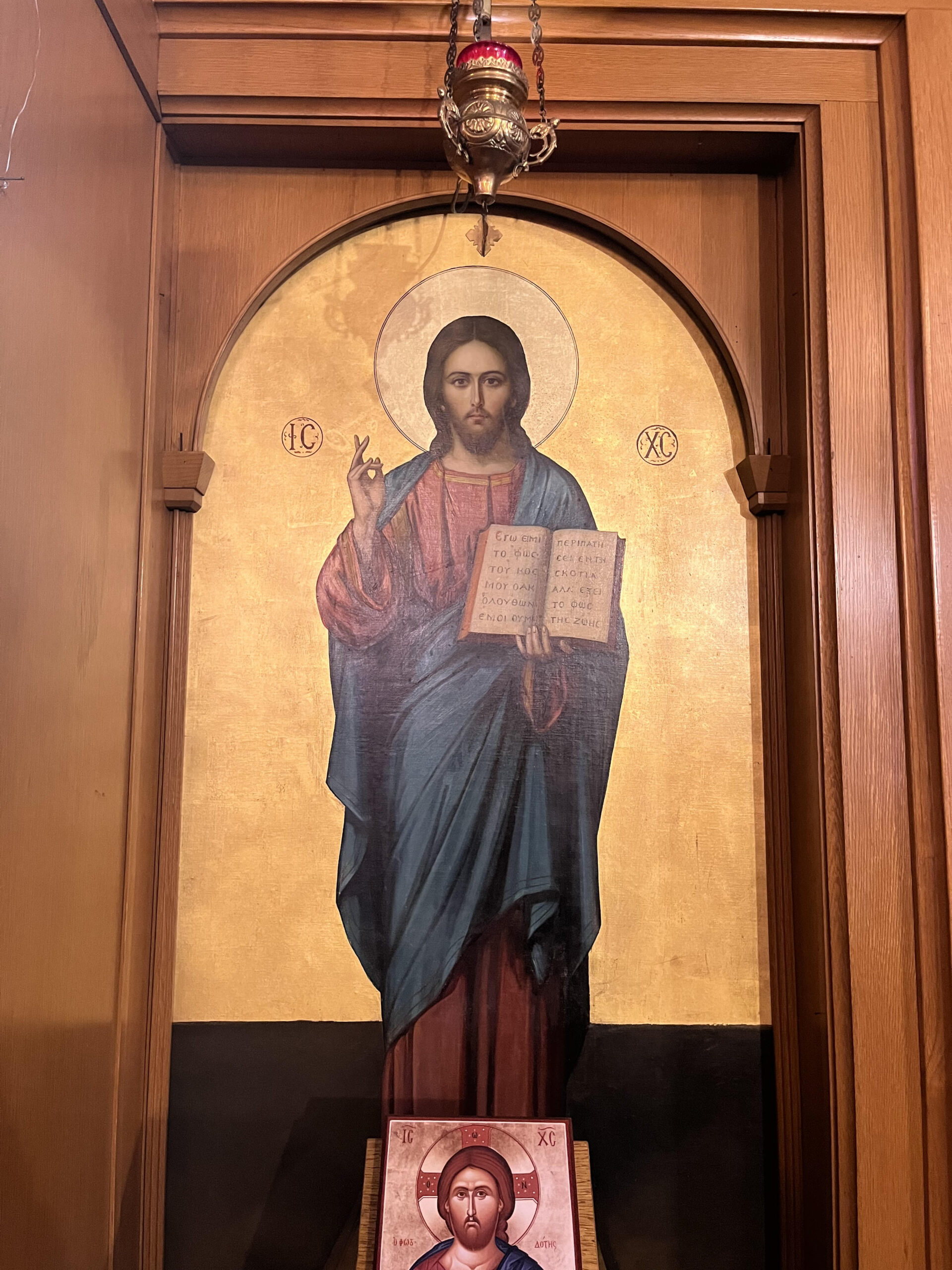
For God so loved the world that He gave His only Son, that whoever believes in Him should not perish but have eternal life. For God sent the Son into the world, not to condemn the world, but that the world might be saved through Him.
John 3:16-17
The majority of the Creed is dedicated to defining what we believe about Jesus Christ, the Son of God. The “Old Testament God” (the Father) was easy to believe in. People had followed after God for generations, for many centuries. Jesus Christ proved to be the promised Messiah. However, not everyone believed that. Also, because of the persecution and resulting lack of communication in the first centuries of Christianity, there were people who didn’t understand who Christ is from a theological perspective. When the Church emerged from underground in the early fourth century, there was a lot of confusion about Jesus Christ. Was He fully God and fully man? Was He created by God, or uncreated? Was He fully God but not fully man? Was He a man who at the Resurrection became God? There were lots of questions and confusion like this.
The majority of the Creed was dedicated to the Second Person of the Holy Trinity, Jesus Christ. The section of the Creed related to Jesus Christ is as follows:
And in one Lord Jesus Christ, the only-begotten Son of God, begotten of the Father before all ages; Light of Light, true God of true God, begotten, not created, of one essence with the Father through Whom all things were made. Who for us men and for our salvation came down from heaven and was incarnate of the Holy Spirit and the Virgin Mary and became man. He was crucified for us under Pontius Pilate, and suffered and was buried; And He rose on the third day, according to the Scriptures. He ascended into heaven and is seated at the right hand of the Father; And He will come again with glory to judge the living and the dead. His kingdom shall have no end.
The use of the words monogeni and genithenta which are both translated “begotten” in English were probably the most challenging concepts in the Creed. Christ is uncreated, and shared the same substance, in Greek homoousios (essence) with the Father. Since He shares the same essence with the Father, the Son is also uncreated and was part of the creation of the world. He is Light and true God, sharing the same essence in these things with the Father and with the Spirit. The Creed provides the most succinct theology on the eternal nature of Christ. These were the most argued points at the First Ecumenical Council and again at the Fourth Ecumenical Council in Chalcedon in 451 A.D.
The second person of the Trinity is known by many names—the Son, Jesus, Christ, the Messiah, the Son of Man, the Son of God, Logos, Word, etc. In His Gospel, the Evangelist John is quick to establish the eternal nature of the Word of God as existing pre-eternally with the Father and the Spirit. He is an integral part of the creation. In John 1:1-3, we read: In the beginning was the Word, and the Word was with God, and the word was God. He was in the beginning with God; all things were made through Him, and without Him was not anything made that was made.
The incarnation is where the second person of the Trinity takes on our flesh and become a man. The full God takes on full humanity. This is best described in John 1:14, where we read, And the Word became flesh and dwelt among us, full of grace and truth; we have beheld His glory, glory as of the only Son from the Father. In order to be fully man, Jesus entered the world in the same way that every person enters the world, through the womb of a mother. The incarnation, however, did not involve male and female matter coming together, as the rest of us are born. Rather, the Holy Spirit came into the Virgin Mary and the birth of Christ came about without the “seed” (male matter) that causes a pregnancy.
Two words of the Creed are use on Pontius Pilate, who was a despicable figure in the story of salvation, as He was the one who gave the order to crucify Jesus. His name is included in order to provide historical context for when Jesus walked the earth. It wasn’t at just any time, but at the particular period of time when Pontius Pilate was governor of Syria. Pontius Pilate is a historic figure. Even non-Christians accept him as a historic figure who lived and ruled the area where Jesus was ministering two thousand years ago.
The facts that Jesus suffered and was buried are significant. He suffered as a man. He felt the pain of the torture and crucifixion and was not spared any of that even though He is fully God. He was buried, in other words, He died a human death and received a human burial. For those who thought (and still think) that the crucifixion was painless for Jesus, or that He went into a coma and did not fully die, the Creed reminds us that His suffering was immense and He did in fact die a physical death.
Where faith comes in is that on the third day He rose from the dead, and forty days later, He ascended into heaven and sat down at the right hand of the Father. The story does not end there, however. He will come again in glory. He will not come quietly as happened at the Incarnation. Rather He will return with great glory and when He returns, He will sit as the judge of the living (those who are living on earth at that time) and the dead (all those who pass away before the Second Coming). The Kingdom of God has no beginning and no ending. God is without beginning, and thus His Kingdom and reign is without beginning. Eternal life means life will go on forever, without end, in the Kingdom of God.
John 3:16-17 are two great summary verses about the purpose of the Incarnation of Christ into the world. The motive of God the Father to give His Son to the world was love. Everything God does is ultimately motivated by His love for His creation. God so loved the world that despite the fallenness of His creation, in order to remedy that brokenness, He sent Jesus Christ into the world so that those who believe (and who manifest that belief through works of faith, believing in God is loving God, and works of love are how we love our neighbor) in Him should not perish (be consigned to Hades and permanent estrangement from God) but have eternal life. The purpose of Christ to come into the world is not to condemn the fallen world but to save it.
Father Almighty, thank You for the gift of Your Son Jesus Christ Who came into the world to save fallen humanity through His Incarnation, Crucifixion and Resurrection. Help me to be an imitator of Christ’s humility and service, and His example of love and devotion to You, Lord, and to humanity. Help me to comprehend the message so that I can have faith, and help my faith inspire me to do good works. Show your grace and mercy to me when You come again in glory. Count me worthy to sit at Your right hand to eternity. Amen.
In order to believe in Christ, one must believe that He is one with God, is uncreated, and was incarnated into this world as a human being, remaining fully God and fully man, dying on the Cross and being Resurrected from the dead. The story doesn’t end with the Resurrection. Part of faith is believing in the second coming of Christ, when He will return to judge the living and the dead.